

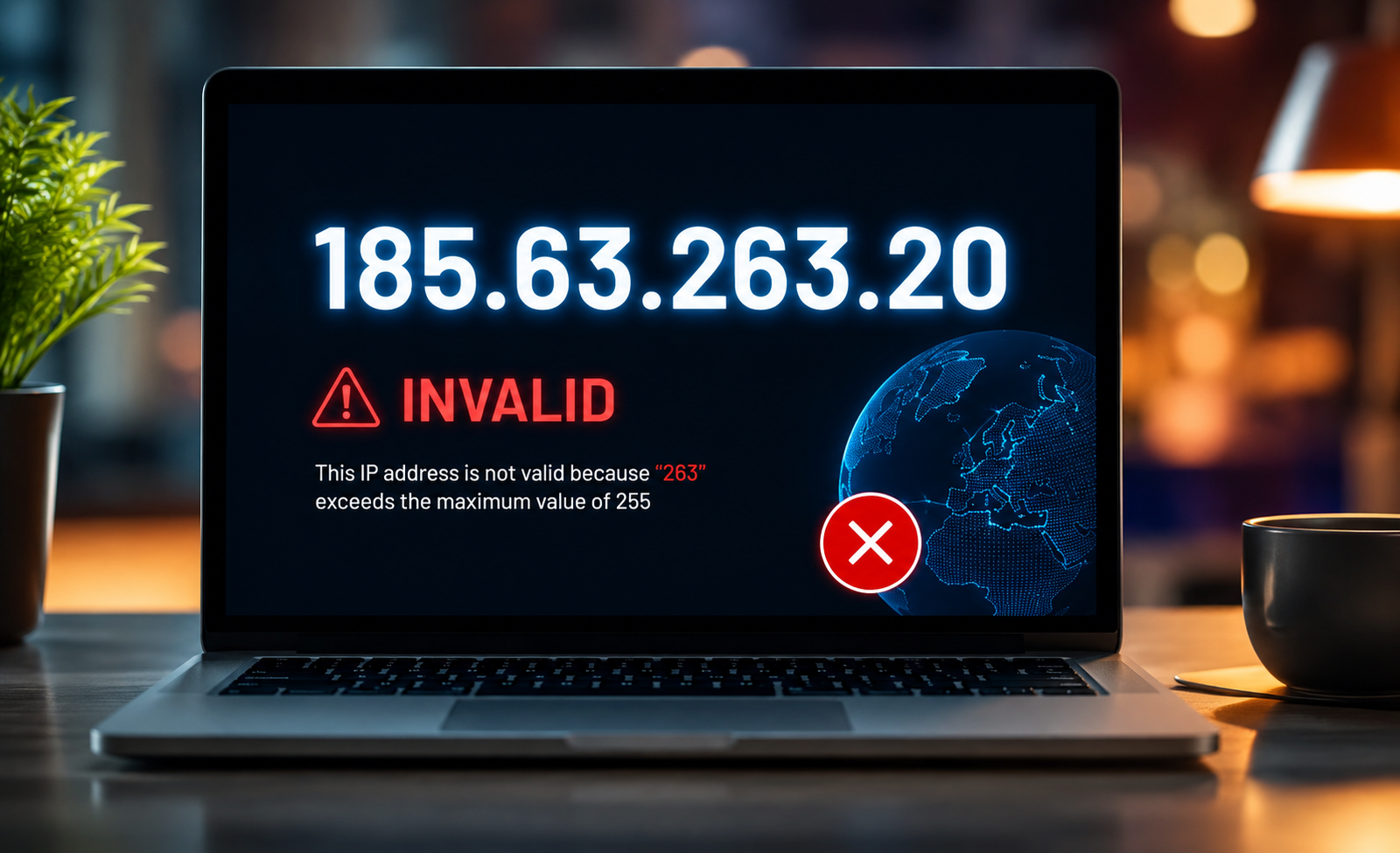
If you have searched for 185.63.263.20, you may be wondering whether it is a real IP address, where it is located, or if it is connected to a website or online service. Many users come across IP addresses while checking server logs, troubleshooting internet connections, or performing network security checks. However, not every IP address you find online is actually valid.
The important thing to know is that 185.63.263.20 is not a valid IPv4 address. One section of the address contains the number 263, which exceeds the maximum value allowed in an IPv4 address. Understanding why this happens can help you avoid confusion, identify typing mistakes, and perform more accurate network troubleshooting.
What Is 185.63.263.20?
At first glance, 185.63.263.20 looks like a standard IPv4 address because it follows the familiar format of four numbers separated by periods. This format is used by millions of devices connected to the internet every day. However, appearance alone does not determine whether an IP address is valid.
The third section of this address contains the value 263, which is outside the accepted IPv4 range. Because of this single number, the address cannot be assigned to any internet-connected device or server.
Understanding IPv4 Addresses
IPv4, or Internet Protocol Version 4, is the most widely used addressing system on the internet. Every IPv4 address contains four separate numbers called octets. Each octet must fall within a specific numerical range.
Each octet can only contain values from 0 to 255. If even one number exceeds this limit, the address becomes invalid and cannot function on any network.
For example:
- 192.168.1.1 ✅ Valid
- 8.8.8.8 ✅ Valid
- 185.63.263.20 ❌ Invalid
Although the format appears correct, the value 263 makes the address unusable.
Why Is 185.63.263.20 Invalid?
The reason is straightforward. IPv4 addresses use 8-bit numbers for each section, allowing only values between 0 and 255.
Since 263 is greater than 255, the address violates IPv4 standards. Networking equipment, operating systems, routers, and internet service providers will reject it as an invalid address.
This means the address cannot:
- Identify a computer
- Host a website
- Operate a server
- Route internet traffic
- Connect to another network device
Common Reasons People Search for 185.63.263.20
There are several reasons why users may search for an invalid IP address online. Most of the time, the issue is not malicious but simply a mistake or misunderstanding.
One of the most common causes is a typing error. Someone may accidentally type 263 instead of another number that falls within the valid range.
Another possibility is that the address was copied incorrectly from a document, screenshot, or server log. Formatting errors can also occur when software exports network data.
Sometimes automated tools generate malformed addresses due to software bugs or data corruption, causing invalid IP addresses to appear in reports.
How to Verify an IP Address
Whenever you encounter an unfamiliar IP address, it is a good idea to verify whether it is valid before investigating further.
Start by checking each of the four numbers individually. Every section should contain a value between 0 and 255. If any number exceeds this range, the address is invalid.
You can also review the address carefully for missing periods, extra spaces, or accidental typing mistakes. Many invalid addresses result from simple human error rather than technical issues.
Can 185.63.263.20 Belong to a Website?
No.
Because 185.63.263.20 is not a valid IPv4 address, it cannot be assigned to any website, hosting provider, cloud server, business network, or internet-connected device.
A valid website must operate from a properly assigned IP address that follows internet standards. Since this address fails the validation rules, no domain can legitimately use it.
Is 185.63.263.20 Dangerous?
The address itself is not dangerous because it cannot exist as a functional IPv4 address.
However, if you encounter this address in emails, suspicious messages, or unknown software, it is worth checking whether it was entered incorrectly. An invalid IP address could indicate a typo, a configuration mistake, or inaccurate documentation.
In most situations, the address itself does not represent a cybersecurity threat.
Difference Between Valid and Invalid IP Addresses
Understanding the difference between valid and invalid IP addresses makes network troubleshooting much easier.
A valid IP address follows all IPv4 rules and can identify a device on a network. An invalid address breaks one or more formatting rules, making it unusable for communication.
Examples of valid addresses include:
- 1.1.1.1
- 8.8.8.8
- 185.63.200.20
Examples of invalid addresses include:
- 185.63.263.20
- 300.10.10.1
- 10.500.1.1
In each invalid example, at least one number exceeds the maximum allowed value.
How IPv4 Validation Works
Before an IP address is accepted by a network, software checks whether it follows the required formatting rules.
The validation process confirms that the address contains exactly four sections separated by periods. It also verifies that each section contains only numbers within the accepted range.
If any rule fails, the address is rejected immediately. This prevents invalid network configurations and communication errors.
Could This Be a Typographical Error?
Yes, this is one of the most likely explanations.
Someone may have intended to enter another number instead of 263. Since only numbers from 0 to 255 are allowed, even a small typing mistake creates an invalid address.
When troubleshooting, compare the address with the original source to determine whether a digit was entered incorrectly.
Why Accurate IP Addresses Matter
Correct IP addresses are essential for reliable internet communication. Websites, cloud services, email servers, gaming platforms, and business networks all depend on valid addressing.
An incorrect IP address can prevent devices from connecting, interrupt online services, or cause configuration failures. For this reason, network administrators carefully verify IP addresses before deploying systems.
Even a single incorrect digit can stop communication entirely.
Best Practices When Working With IP Addresses
Whether you manage a website or troubleshoot home networking, following a few simple practices can prevent common mistakes.
Always double-check every number before saving network settings. Use trusted network utilities to validate addresses, and avoid copying IP addresses from unreliable sources without verification.
Keeping accurate documentation also helps reduce configuration errors and simplifies future troubleshooting.
FAQs
Q1. Is 185.63.263.20 a real IP address?
No. It is not a valid IPv4 address because one of its four numbers exceeds the maximum allowed value of 255.
Q2. Can I locate 185.63.263.20?
No. Since the address is invalid, it has no physical location, owner, or hosting provider.
Q3. Why does 263 make the address invalid?
Each section of an IPv4 address must contain a number between 0 and 255. The value 263 falls outside this range.
Q4. Can websites use this IP address?
No. Websites require valid IP addresses to operate on the internet.
Q5. Should I worry if I see this address?
Usually not. It is most likely the result of a typing mistake, formatting error, or incorrect documentation.
Conclusion
Although 185.63.263.20 appears to resemble a normal IPv4 address, it is not technically valid because one of its octets exceeds the allowed numerical range. As a result, it cannot identify a device, host a website, or function on the internet. If you encounter this address, verify whether it was entered correctly and compare it with the original source. Understanding how IPv4 validation works can help you identify mistakes quickly, improve network troubleshooting, and avoid unnecessary confusion.
