


When the first official King Charles portrait since his coronation was unveiled in May 2024, it stopped people in their tracks. Painted by renowned artist Jonathan Yeo, this larger-than-life canvas shows the King in the scarlet uniform of the Welsh Guards, emerging from a sea of vivid red paint, with a delicate monarch butterfly hovering near his shoulder. It’s not your typical royal portrait – no grand throne, no glittering crown, just the man himself, calm and composed against a dramatic backdrop that has sparked endless debate.
This King Charles portrait captures something deeper than surface appearance. It reflects a monarch stepping into a new era, blending centuries-old tradition with contemporary flair. In this article, we’ll explore the story behind its creation, unpack the symbolism that has everyone talking, examine why the bold colours provoked such strong reactions, and place it within the long lineage of British royal portraiture. Whether you love its modern edge or find the intensity a bit overwhelming, there’s no denying its impact – it promises to be one of the most memorable images of King Charles’s reign.
The Unveiling: A Moment at Buckingham Palace
The King Charles portrait was revealed on 14 May 2024 in a ceremony at Buckingham Palace. Commissioned by the Drapers’ Company – a historic City of London livery company with a long tradition of collecting royal portraits – the painting had been in progress for several years. Work began back in 2021 when Charles was still Prince of Wales, with the first sitting taking place at Highgrove House. Over four sessions, artist Jonathan Yeo captured not just the likeness but the essence of a man on the cusp of kingship.
King Charles himself reportedly joked upon seeing the final work, “It’s not too frightening, is it?” But the unveiling drew gasps. The sheer scale – measuring approximately 8½ feet by 6½ feet – commands attention, while the overwhelming red background gives the impression that the King is materialising from flames or blood. Yet Charles appeared pleased, and the portrait now hangs permanently in Drapers’ Hall, though it was first shown publicly at the Philip Mould Gallery in London.
Jonathan Yeo: The Artist Who Dared to Paint Red
Jonathan Yeo is one of Britain’s most sought-after portrait painters, known for fearless, insightful works. He has painted celebrities like Tony Blair, David Attenborough, and Malala Yousafzai, often injecting subtle contemporary twists into traditional forms. Yeo studied at the University of Kent and honed his craft through self-directed practice rather than formal art school dogma.
For the King Charles portrait, Yeo aimed to bridge tradition and modernity. He explained that he wanted to reference classic royal portraiture while reflecting a 21st-century monarchy. The uniform pays homage to military heritage, but the abstract background and butterfly introduce narrative elements tied to Charles’s personal passions – particularly his lifelong commitment to environmental causes.
Decoding the Symbolism in the King Charles Portrait
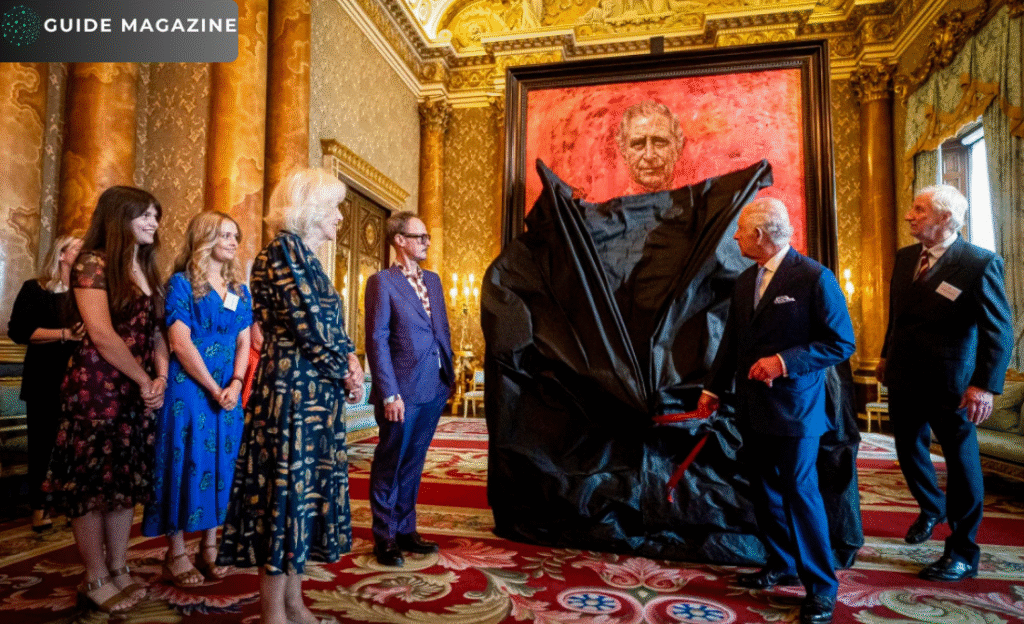
Symbolism lies at the heart of what makes this portrait so compelling. The most talked-about element is the monarch butterfly perched on the King’s shoulder. It was reportedly the King’s own idea, added towards the end of the process. The butterfly represents metamorphosis – the transformation from Prince to King – while also nodding to Charles’s deep interest in nature and biodiversity.
Then there’s the colour red. Yeo started with a more conventional background but gradually overlaid vivid crimson, allowing it to bleed into the uniform. He has said the red evokes the intensity of royal duty and military tradition, while softening around the face to draw focus to the King’s expression – calm, thoughtful, slightly weary. Some see vitality and passion; others interpret darker tones, especially given the portrait’s timing amid the King’s cancer diagnosis.
Key symbolic elements include:
- The Butterfly: Transformation, environmental advocacy, fragility of life
- Red Background: Military heritage (Welsh Guards uniform), passion, power, perhaps sacrifice
- Hands Clasping Sword: Quiet strength and readiness to serve
- Softened Facial Tones: Humanity and approachability in an otherwise bold composition
Why the Bold Red Divided Opinion
Few royal portraits have provoked such immediate, polarised reaction. Social media exploded with memes comparing the King to a figure emerging from hellfire or drowning in blood. Critics called it “ghastly” or “demonic”; supporters praised its daring modernity. Even seasoned art commentators were split – The Guardian described it as “facile flattery,” while others hailed its emotional depth.
The controversy reached a literal peak in June 2024 when Animal Rising activists vandalised the portrait at the Philip Mould Gallery, sticking cartoon posters over the King’s face in protest against animal welfare standards. The act, though quickly reversed, highlighted how the portrait had become a lightning rod for broader debates about monarchy and activism.
Video shows King Charles’ portrait being vandalized by activists
Yet many admire its bravery. In an age of filtered Instagram perfection, this King Charles portrait feels raw and human.
Placing It in History: Royal Portraits Through the Ages
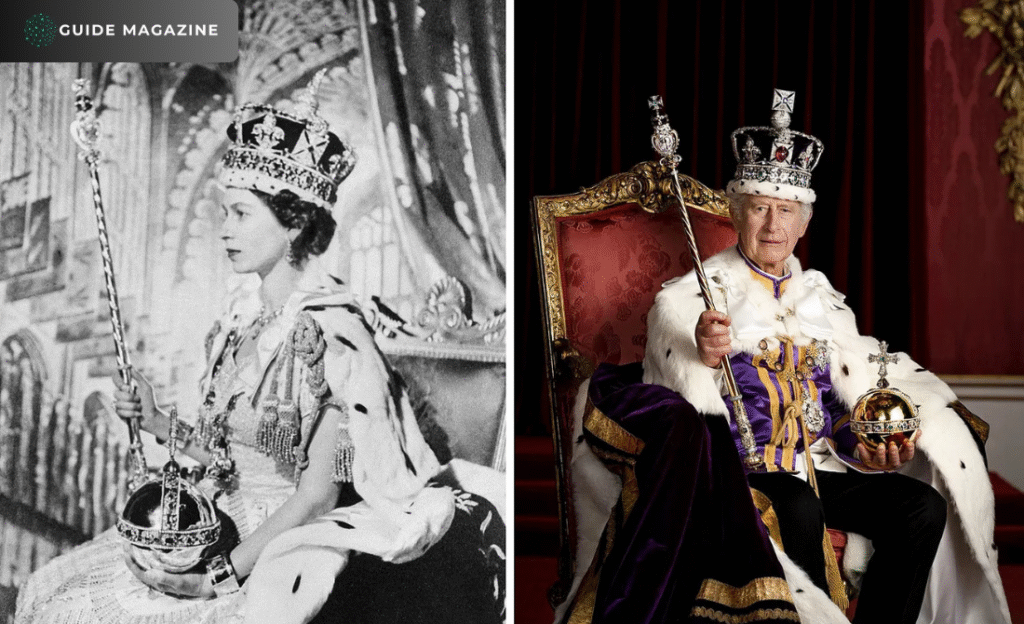
Royal portraiture has always been about projecting power, legitimacy, and personality. From Hans Holbein’s imposing Henry VIII to Annie Leibovitz’s photographs of Queen Elizabeth II, each era leaves its mark.
The King Charles portrait breaks from recent tradition in several ways:
- Departure from Realism: Unlike Queen Elizabeth’s serene, jewel-toned portraits, this leans abstract
- Personal Narrative: Earlier portraits focused on regalia; here, environmental symbolism takes centre stage
- Emotional Honesty: The King’s face shows age and experience, much like late portraits of Elizabeth II
Comparisons are inevitable with past monarchs. Charles’s father, Prince Philip, sat for stark modern works; his mother favoured classical elegance. This portrait feels distinctly his own.
Creation Process and Technical Mastery
Yeo worked from life across multiple sittings, supplemented by photographs. The canvas’s immense size required a specially built platform at Clarence House. He used oil paint in thick, expressive strokes for the background, contrasting with finer detailing on the face and uniform.
The red layers were built gradually, with Yeo explaining that the colour “envelops” the figure, symbolising how duty encompasses the individual. The butterfly was painted last, almost floating in space – a delicate counterpoint to the heavy pigment elsewhere.
Where You Can View the King Charles Portrait Today
After its public debut, the portrait returned to its permanent home at Drapers’ Hall in the City of London. The Drapers’ Company occasionally opens its historic rooms for tours, offering a chance to see this and other royal works up close. High-quality prints and merchandise have also appeared, ensuring wider access.
The Lasting Legacy of a Controversial Masterpiece
The King Charles portrait has already secured its place as one of the defining images of his reign. By embracing boldness over bland tradition, it mirrors a monarch known for strong opinions on architecture, environment, and organic farming. Whether admired or criticised, it demands attention – and that, perhaps, is the point.
FAQs
1. Who painted the official King Charles portrait?
Jonathan Yeo, a leading British portrait artist.
2. What does the butterfly in the portrait mean?
It symbolises the King’s transformation from Prince to King and his lifelong passion for nature and the environment.
3. Why is the background so bright red?
The vivid red represents military tradition (Welsh Guards uniform), the weight and passion of royal duty, and creates a dramatic, modern effect.
Conclusion
The King Charles portrait by Jonathan Yeo is more than paint on canvas – it’s a statement about monarchy in the 21st century: traditional yet forward-looking, dignified yet daring. Love it or not, it has sparked conversation worldwide, reminding us that great art should provoke thought.
